Discover how T-Mobile T-Satellite can help campus safety teams address cellular coverage gaps and strengthen emergency communications across remote facilities and outdoor locations.
For campus police and public safety teams, communication gaps can become operational problems quickly. An officer responding to an incident, a team working at a remote athletic facility or staff supporting an outdoor university event may find themselves in an area where traditional cellular coverage is limited or unavailable.
Campus safety plans often rely on dependable communication, but coverage can vary across large campuses, rural properties, research sites and surrounding areas. T-Mobile T-Satellite offers another connectivity option for compatible devices in eligible locations, helping address certain gaps where traditional cellular coverage is unavailable.
It isn’t a replacement for a reliable cellular network or a complete emergency communications plan. It is an additional option worth understanding when reviewing how campus teams stay connected.
Why Campus Coverage Gaps Deserve Attention
A university may have strong cellular coverage across academic buildings and residence halls, yet still experience gaps around outdoor athletic facilities, remote research sites, agricultural land and properties beyond the main campus. Severe weather, infrastructure damage and network congestion can create further challenges when reliable communication matters most.
T-Mobile T-Satellite offers another way to address these gaps. Powered by a network of more than 650 satellites, the service can extend connectivity across more than 500,000 square miles of the United States where no cellular provider offers coverage.
For campus public safety teams, this could provide an additional communication option when working beyond traditional cellular coverage. Explore the T-Satellite U.S. coverage map to review connectivity in areas relevant to your campus operations.
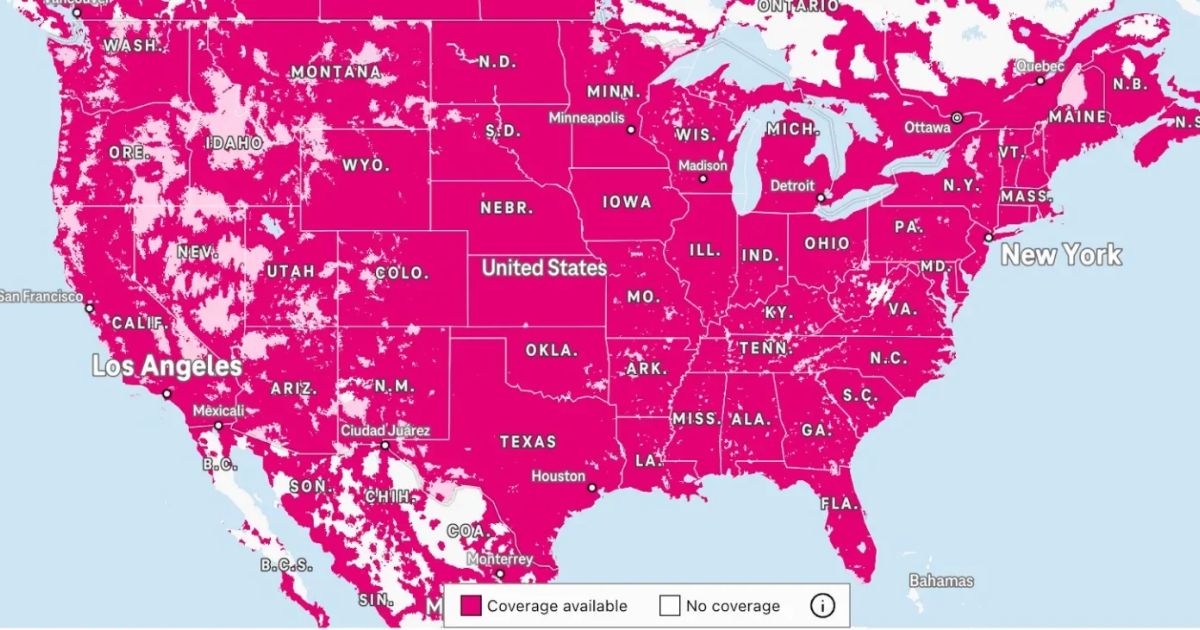
Satellite connectivity has also demonstrated its potential during real-world emergencies. During Hurricanes Helene and Milton, T-Mobile reported that its satellite-to-cell service supported more than 500,000 text messages, helping people communicate as communities faced network congestion and infrastructure damage.
These examples highlight why satellite connectivity deserves consideration in campus emergency planning—not as a replacement for existing communication systems, but as an additional option when conventional coverage falls short.
How T-Mobile T-Satellite Can Help
T-Mobile T-Satellite uses satellites to connect compatible mobile devices in eligible areas where traditional cellular coverage is unavailable. Rather than relying solely on nearby cell towers, supported devices can connect through the satellite network when conditions allow.
For campus public safety teams, this may provide another way to communicate when working beyond conventional coverage. Depending on the device, location and supported service, T-Satellite can support texting and selected satellite-ready apps. Certain apps offer capabilities such as location sharing, mapping and messaging.
T-Satellite is also designed to work with many compatible modern smartphones, without requiring a separate satellite phone. T-Mobile says most smartphones from the last four years are supported, although device eligibility should always be checked.
Where Could T-Satellite Support Campus Operations?
|
Campus scenario |
Potential benefit |
|
Remote athletic facilities |
An additional way to send messages when cellular coverage is unavailable |
|
Outdoor campus events |
Another communication option for teams operating beyond reliable cellular coverage |
|
Research sites and rural properties |
Connectivity options for staff working away from the main campus |
|
Severe weather or network disruption |
An additional tool to consider within a wider communications resilience plan |
Satellite Connectivity Is One Part of the Plan
T-Satellite should complement—not replace—a university's established emergency communications systems. Campus leaders should assess where coverage gaps exist, which devices staff use and what communication methods are required during an incident. It's also important to consider how satellite connectivity fits alongside push-to-talk communication, radio systems, emergency alerts and backup internet connections.
Testing equipment, documenting procedures and training staff on when and how to use each communication method are essential parts of that preparation.
Plan for the Places Your Network Can't Reach
Campus safety doesn't stop at the edge of cellular coverage. T-Mobile T-Satellite offers universities another option to explore when preparing for communication gaps across remote facilities, outdoor operations and emergency scenarios.
Premier Wireless helps campus public safety teams assess connectivity requirements and identify solutions that fit their operational needs, combining T-Mobile connectivity with the right devices and deployment support.
Related Articles
Oct 15, 2026, 10:00:00 AM

Feb 12, 2026, 12:00:00 AM

Mar 14, 2019, 12:00:00 AM