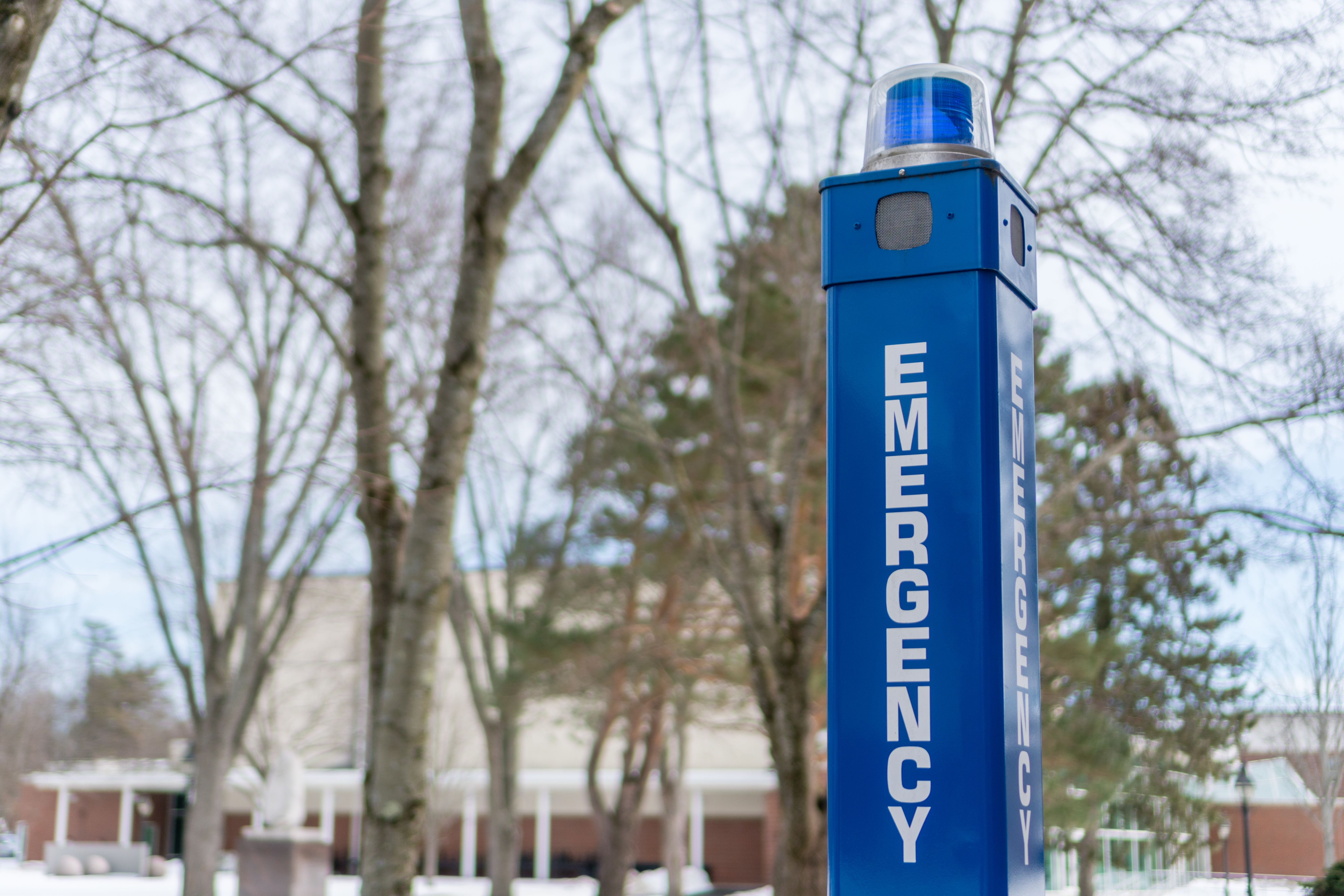
School safety has become one of the most important responsibilities facing education leaders today.
While no school wants to imagine a serious emergency occurring on campus, administrators are increasingly being asked to evaluate how quickly staff can request help, communicate critical information, and coordinate response efforts when seconds matter.
At the same time, legislation such as Alyssa's Law is driving greater adoption of panic button technologies in schools across the country.
For school leaders, understanding panic button compliance is no longer simply a technology discussion. It's becoming an important part of overall school safety planning.
School Safety Continues to Be a Priority
School emengencies can take many forms.
While active shooter events often receive the most attention, schools also face medical emergencies, student altercations, unauthorized visitors, behavioral incidents, and other situations that require an immediate response:
- According to the National Center for Education Statistics (NCES), 67% of public schools recorded at least one violent incident during the 2021-22 school year.
- Approximately 70% of public schools have reported recording one or more violent incidents in recent years, highlighting the ongoing need for effective safety and response procedures.
Recent incidents in communities across the United States have also reinforced the importance of rapid emergency communication. Events such as the shooting at Marjory Stoneman Douglas High School in 2018 and the tragedy at Robb Elementary School in 2022 have intensified conversations around emergency preparedness, response coordination, and school safety technology.
For school administrators, the question is no longer whether an emergency could occur. The focus is increasingly on how quickly help can be requested and delivered when it does.
Understanding Alyssa's Law
Alyssa's Law is named after Alyssa Alhadeff, one of the students killed during the 2018 Parkland school shooting.
The legislation generally requires schools to implement silent panic alarm systems capable of directly notifying law enforcement and emergency responders during critical incidents. The objective is simple: reduce notification delays and help accelerate emergency response times.
As of 2026, multiple states have enacted versions of Alyssa's Law, and additional states continue to evaluate similar legislation.
While specific requirements vary by state, the broader trend is clear.
Schools are moving toward emergency communication systems that provide:
- Immediate emergency notification capabilities
- Faster coordination with first responders
- Enhanced situational awareness during incidents
- Greater protection for students, faculty, and staff
For many districts, panic button technology has become a key component of these efforts.
Panic Buttons Are About More Than Active Shooter Events
One common misconception is that panic buttons are designed solely for active shooter situations.
In reality, schools can use emergency alert systems for a wide range of incidents, including:
- Medical emergencies
- Student fights or behavioral escalations
- Threatening visitors
- Staff safety concerns
- Campus security incidents
- Lockdowns and emergency evacuations
The ability to discreetly request assistance can help reduce response times and improve coordination regardless of the type of emergency.
This is particularly important in large campuses, multi-building school districts, athletic facilities, and environments where staff may not have immediate access to administrators or security personnel.
A Connected Approach to School Safety
Compliance is only one part of the conversation. Today's schools need more than a panic button—they need a connected approach to emergency response.
For K-12 schools and districts, ProteqNet™ provides several capabilities that support both emergency preparedness and evolving panic button requirements:
- Connected emergency alerts that allow staff to quickly request assistance during critical incidents
- Real-time location visibility to help responders identify where help is needed
- Instant escalation workflows that notify the appropriate personnel and stakeholders
- Rapid alert delivery through multiple communication channels
- Always-connected protection designed to support emergency response across campus environments
Why Cellular Connectivity Matters
An emergency notification system is only effective if it can reliably communicate when needed.
Schools often span multiple buildings, portable classrooms, athletic facilities, parking lots, and outdoor gathering spaces. During emergencies, local Wi-Fi networks may also become congested, disrupted, or unavailable.
That's why ProteqNet leverages T-Mobile's nationwide 5G network to provide an independent communication path that doesn't rely solely on school Wi-Fi infrastructure.
This can help schools achieve:
- Reliable connectivity across campus environments
- Coverage beyond the classroom, including outdoor facilities
- Reduced dependence on local network availability
- Faster emergency notification and escalation
For school leaders evaluating panic button compliance, connectivity should be considered just as important as the device itself. After all, an alert can only be effective if it successfully reaches the people responsible for responding.
Is Your District Prepared for Evolving Panic Button Requirements?
As school safety expectations continue to evolve, administrators are being asked to balance compliance requirements, emergency preparedness, and campus-wide safety strategies.
ProteqNet™ helps schools support panic button initiatives through connected emergency alerting, real-time location visibility, coordinated response workflows, and reliable nationwide connectivity powered by T-Mobile's network.
Whether you're evaluating Alyssa's Law requirements, updating emergency response procedures, or planning future safety investments, Premier Wireless can help.
Schedule a consultation to learn how ProteqNet™ can support your district's school safety objectives.